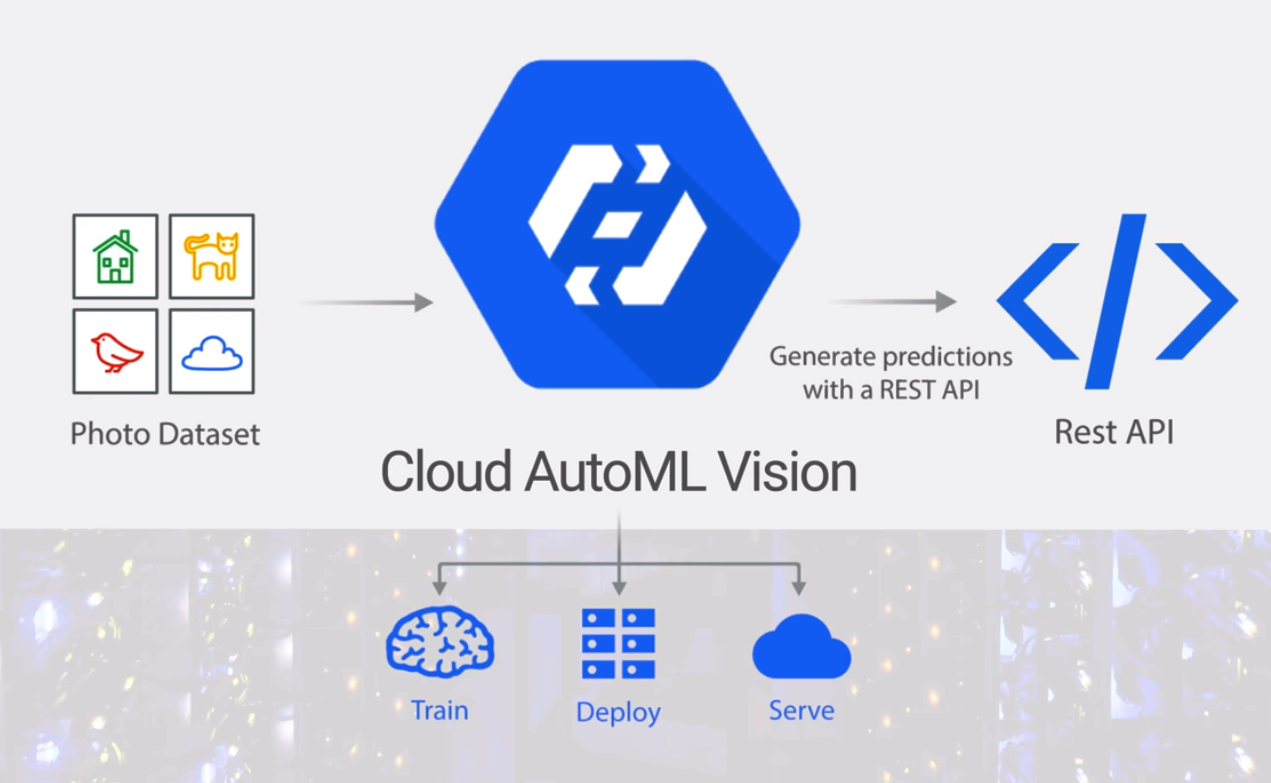
Automated machine learning (AutoML) tools promise to democratize AI by handling data preprocessing, feature selection, model tuning, and even deployment. For financial institutions, AutoML seems like an attractive way to accelerate projects and reduce dependency on scarce data science talent. But AutoML in finance comes with both promise and pitfalls. In this post, I’ll break down the benefits, risks, and best practices for adopting AutoML responsibly.
What AutoML offers
- Speed. Quickly train and evaluate dozens of models without manual intervention.
- Accessibility. Allows business analysts with limited ML background to prototype models.
- Consistency. Automated pipelines reduce variance from manual trial-and-error approaches.
- Benchmarking. Provides strong baselines to compare against hand-crafted models.
Popular AutoML tools
Some widely used AutoML frameworks include:
- H2O AutoML. Open-source, widely adopted in finance for tabular data.
- Auto-sklearn. Focuses on automated model selection and hyperparameter tuning for scikit-learn pipelines.
- TPOT. Uses genetic programming to evolve ML pipelines.
- Google AutoML / Vertex AI. Cloud-native solutions with integrated deployment options.
- Azure AutoML. Microsoft’s AutoML platform with strong enterprise integration.
Hands-on example: AutoML with H2O
import h2o
from h2o.automl import H2OAutoML

h2o.init()
train = h2o.import_file("credit_data.csv")

aml = H2OAutoML(max_models=20, seed=1)
aml.train(y="default_flag", training_frame=train)

# Leaderboard
lb = aml.leaderboard
print(lb.head())
With minimal code, you get a leaderboard of models with performance metrics, ready for evaluation.
Promise for financial services
- Credit scoring. AutoML can accelerate building risk models from structured credit bureau and transactional data.
- Fraud detection. Quickly generate candidate models to handle imbalanced data challenges.
- Customer segmentation. Identify patterns for targeted marketing without heavy manual feature engineering.
- Stress testing. Run multiple models under simulated scenarios to assess portfolio risk.
Pitfalls of AutoML in finance
- Regulatory compliance. Many AutoML models (e.g., stacked ensembles) are black boxes, hard to explain to regulators.
- Overfitting risk. AutoML may exploit dataset quirks if not validated on truly independent samples.
- Feature leakage. Automated feature engineering may accidentally use information unavailable at prediction time.
- Operational fit. AutoML pipelines may not integrate easily into production systems.
- Cost. Cloud AutoML solutions can become expensive with large datasets or frequent retraining.
Best practices for using AutoML in finance
- Human oversight. Always involve data scientists to validate outputs and check for leakage.
- Explainability tools. Pair AutoML with SHAP or LIME to generate explanations for regulators and stakeholders.
- Custom constraints. Define fairness or monotonicity constraints relevant to credit or pricing models.
- Independent validation. Hold out a truly unseen dataset to evaluate final models.
- Integration planning. Ensure AutoML pipelines export models compatible with existing MLOps frameworks.
Case study: Credit risk modeling
A regional bank used H2O AutoML to prototype credit risk models. The AutoML leaderboard showed strong ensemble models, but regulators required transparency. The data science team retrained the best single model (Gradient Boosting Machine), added monotonicity constraints, and used SHAP values for interpretability. Result: improved performance over logistic regression, with regulatory acceptance intact.
Conclusion
AutoML can accelerate machine learning adoption in finance, but it is not a substitute for human expertise. The promise lies in speed and accessibility; the pitfalls lie in compliance, interpretability, and integration. The best approach is hybrid: use AutoML for exploration and baselines, then refine models manually to ensure they meet domain, regulatory, and operational requirements.
"In finance, AutoML is a starting point, not the finish line." – Ashish Gore
If you’d like, I can create a follow-up tutorial on integrating AutoML outputs into an end-to-end MLOps pipeline, covering deployment and monitoring in production environments.